New video: See how HTS products are made in America!
Watch Here
➔

Penetrating and acrylic concrete sealers that protect floors from stains, moisture, and chemical exposure without altering the surface appearance.
A concrete sealer is a protective treatment applied to concrete surfaces to guard against moisture intrusion, staining, chemical damage, and wear. Unlike densifiers, which chemically react within the slab, concrete sealers work by creating a barrier either on the surface or within the pore structure of the concrete. The right concrete sealant extends the service life of floors, driveways, patios, and other concrete installations by preventing the damage that leads to costly repairs and premature replacement.
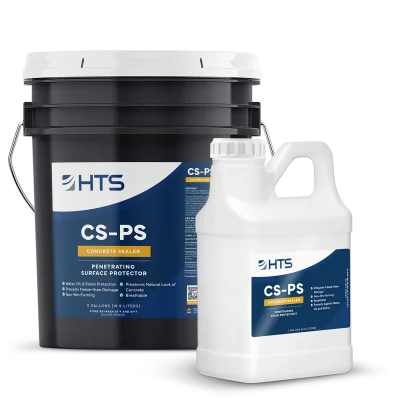
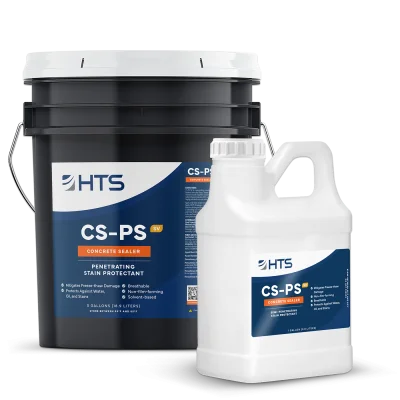
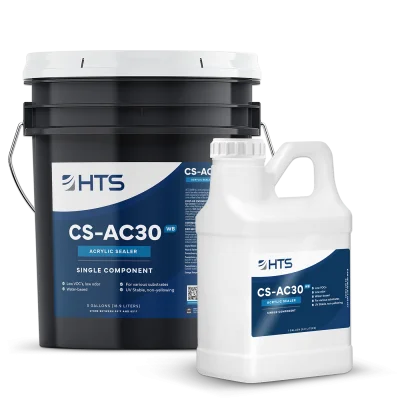
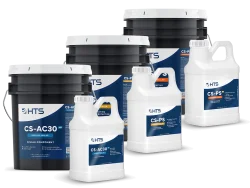
HTS Chemical offers three concrete sealer formulations engineered for different project requirements. CS-AC30 is a water-based acrylic sealer for concrete that provides UV-stable protection with a low-VOC formula, making it safe for indoor and outdoor use. CS-PS is a penetrating concrete sealer based on lithium silicate technology that absorbs into the slab to provide breathable, invisible protection without changing the appearance of the floor. CS-PS SV is a solvent-based penetrating sealer that offers fast drying times and deep penetration, ideal for projects where rapid return-to-service is critical.
HTS sealers protect concrete without compromising the character of the surface. Choose a clear concrete sealer that preserves the natural look of the slab, or a film-forming product that adds a subtle sheen.
Film-forming sealers like CS-AC30 create a protective layer on the concrete surface that provides stain resistance, moisture protection, and a visible sheen. They are the right choice when appearance enhancement and surface protection are both important. Penetrating sealers like CS-PS and CS-PS SV absorb into the concrete and protect from within. They do not alter the appearance or texture of the floor, and because the protection is below the surface, there is no film to peel or wear away. Both CS-PS and CS-PS SV maintain breathability in the slab, allowing moisture vapor to escape. All three sealers are designed for interior concrete, stone, and masonry surfaces.
Choosing between penetrating and film-forming comes down to the project goals. If the priority is invisible protection and vapor transmission, go penetrating. If the priority is color enhancement, stain resistance, and a visible sheen, go film-forming. Both types are available in low-VOC and water-based formulas for use in occupied buildings and LEED-certified projects.
Concrete sealers are essential across a wide range of industries and applications. In warehousing and logistics, a concrete floor sealer protects against oil stains, tire marks, and chemical spills that are part of daily operations. In food and beverage manufacturing, sealed floors meet sanitation requirements and are easier to clean than untreated concrete. Retail, hospitality, and healthcare facilities use sealed concrete as a low-maintenance, high-performance flooring solution that withstands heavy foot traffic while maintaining a professional appearance.
HTS sealers are designed for interior concrete, stone, and masonry surfaces. Interior applications such as garage floors, basement slabs, and warehouse floors are prime candidates for concrete sealant products that prevent staining and moisture damage. For decorative concrete including stamped, stained, and exposed aggregate surfaces, a concrete stain and sealer system preserves the investment and keeps the surface looking new for years.
Let’s get to work.
Speak to an HTS sales rep in your area to discuss your project. We look forward to helping you be successful.
Find a Sales Rep